
COVID Law Briefing: Impacts and Implications for US Prisons- Summary
Learn about the vulnerable US prison population in the era of COVID-19
Earlier this year, Public Health Law Watch, in collaboration with members of the George Consortium and other partner organizations, hosted a series of legal briefings related to COVID-19 and legal and policy issues associated with the global pandemic. Experts and scholars joined us for bi-weekly livestreamed discussions on these issues. We invite you to read the summaries of selected episodes below! And, enjoy relistening to the series (linked below and archived on our #COVIDLawBriefing webpage).
----------
3/31/20: Impacts and Implications for US prisons
Mod: Scott Burris
Speaker: Leo Beletsky
This pilot episode of the #COVIDLawBriefing brought to us by the George Consortium started with the topic of the legal implications of COVID-19 on prisons. Professor Beletsky began by discussing the history of prisons as “incubators for infections,” citing the examples of influenza and HIV. In prison, inmates are living in close quarters and guards go back and forth from their homes to prison, thus greatly expanding the amount of people enclosed in their “bubble.” Professor Beletsky recommended trying to release people as quickly as possible, especially those who were not convicted of crimes, such as people detained pretrail or those in immigration detention. People in immigration detention centers, or those detained pretrial are being exposed to risks that could be alleviated through various legal avenues. There are two central laws that could be invoked to lower our prison population. The first is enforcement discretion; this is the many actors throughout the legal system from police to judges who have the ability to either stop sending so many people to jail or releasing them early to use their power. The other key power is statutory, this is that governors or judges could use the precedent set from earlier epidemics to “depopulate the prisons” and curtail the spread of infectious diseases. The whole legal system from police to judges have the opportunity to try to avoid jail time, but Beletsky predicted a slow response from our law enforcement. With bloated jail times, and already crowded prisons Beletsky described the situation as “a nursing home behind bars.”
----------
Public Health Law Watch’s COVID Law Briefings are co-sponsored by the Center for Health Policy and Law at Northeastern University School of Law, the Center for Public Health Law Research at Temple University Beasley School of Law, the Network for Public Health Law, and the APHA Law Section.

Fighting the Coronavirus and Protecting the Unhoused
Unhoused populations are always vulnerable to health risks and disease, a vulnerability now heightened by the coronavirus epidemic and the spread of COVID-19.
By Leo Beletsky Professor of Law, Northeastern University School of Law and Sterling Johnson Board Member, Angels in Motion; Black and Brown Workers Cooperative
Executive Summary:
On any given night in the United States, federal government data shows that over 500,000 people do not have a home, a count that dramatically underestimates the scope of the problem. The core problem has consistently been lack of access to affordable housing, brought on by bad policy and refusal to take common-sense, evidence-based approaches. The COVID-19 pandemic has brought this problem into focus, as neighborhood organizers take bold actions after governments refused to – like occupying vacant or unused homes – to provide the policy solution public health experts agree works best: housing the homeless.
Unhoused populations are always vulnerable to health risks and disease, a vulnerability now heightened by the coronavirus epidemic and the spread of COVID-19. People without homes more often come into contact with potentially infected surfaces and people, and those in emergency shelters must congregate in tight spaces and share facilities like showers and laundry.

Valuable public health lessons from COVID-19
The lessons of a crisis are of little use if they are not kept in mind after it has passed.
By Robert I. Field
Never let a pandemic go to waste. You might learn something.
A month, ago how much did you know about self-quarantine, social distancing, contact tracing, flattening the curve, or disease testing kits? Now, most of us know that they may save our life – and the lives of millions of others.
A month ago, could you name the director of the National Institute of Allergy and Infectious Diseases? Now, this government official, Dr. Anthony Fauci, holds the entire country’s welfare in his hands.
A month ago, did you think that hand sanitizer, rubbing alcohol, surgical masks – and toilet paper – would be among the most sought-after consumer products?
We have quickly learned a lot about an essential pillar of our country’s well-being: public health. It is more than the city official who closes a local restaurant or the announcer on a public service video who scolds us about wearing a seat belt. Like the security suite running in the background on your computer, it is the often-hidden support that responds to threats before the entire system crashes.
But if we don’t retain our newly gained knowledge, we will be no better prepared when the next threat emerges. Amnesia can kill.
Here are five key lessons from COVID-19 for all of us to bear in mind in the years ahead.
1. You never know when you, and everyone around you, will need public health.
Public health threats don’t usually announce themselves in advance, and they can worsen very quickly. The first case of COVID-19 occurred in Wuhan, China last November. In December, hospitals there were treating dozens of cases. In January, the first cases were confirmed in United States and several other countries. Public health infrastructure needs to be there to respond quickly. You don’t wait to buy an umbrella until after it begins to rain.
2. You don’t hear more about public health because it has been so successful.
Remember when epidemics of polio, smallpox, yellow fever and cholera threatened whole cities? You almost certainly don’t because measures like vaccination, clean drinking water, sanitation and pest control conquered them in this country decades ago, probably before you were born.
3. Public health is most effective when it is global.
Infectious diseases don’t stop at national borders and never have since the dawn of civilization. It is only through international cooperation that we can hope to control their spread, something that has been haphazard this time. Almost no nation on Earth has been spared from COVID-19. We rely on global monitoring to spot emerging flu strains each year so scientists can develop vaccines before they arrive. The more we cooperate globally, the better protected we are.
4. Public health transparency is crucial, and a free press is essential to providing it.
Chinese officials kept the public in the dark about COVID-19 until late January, while people moved freely in and out of Wuhan. China lacks a free press to spread the word. Had the Chinese public learned about the outbreak sooner, we might not be facing the current crisis. And transparency builds public trust, without which the current pandemic responses would not be possible.
5. Our whole economy depends on public health.
Take a look at the stock market. Need I say more?
Those who cannot remember the past are condemned to repeat it, as the saying goes. The lessons of a crisis are of little use if they are not kept in mind after it has passed. COVID-19 is showing us how important it is to keep the security suite running. Even when we don’t see it, we continually rely on public health security so that the threats we don’t yet see are more likely to stay that way.
___________________________
Robert I. Field is professor of law and public health at Drexel University. He is also founder, editor and lead writer of the Health Cents blog on Inquirer.com.
__________________________
This blog post first appeared as an op-ed in the Philadelphia Inquirer.
Public health leaders post open letter to Pence on coronavirus response
This week, public health and legal experts posted an open letter to Vice President Mike Pence and other government leaders detailing the necessary steps for a successful response to the COVID-19 pandemic.
This week, public health and legal experts posted an open letter to government officials, including the leader of the administration’s coronavirus task force, Vice President Mike Pence, detailing the necessary steps for a successful response to the COVID-19 pandemic.
The letter, signed by 488 public health leaders and 14 organizations, states that whether the response is able to effectively diminish the scope and impact of the coronavirus depends on “whether there is adequate funding and support for the response; fair and effective management of surging health care demand; careful and evidence-based mitigation of public fear; and necessary support and resources for fair and effective infection control.”
Read the full letter here.
Gottlieb's threat of federal vaccine mandates: questionable legality, poor policy
Doing so would likely violate the law. It could also worsen the problem of vaccination resistance.
By Wendy E. Parmet
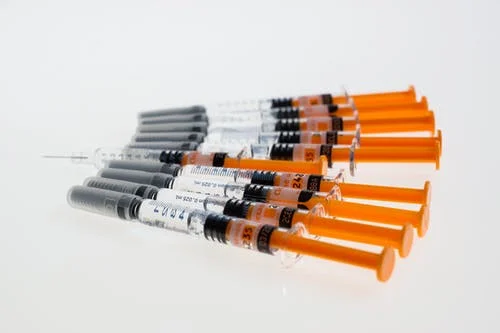
As six outbreaks of measles raged in different parts of the country, Food and Drug Administration Commissioner Scott Gottlieb recently told reporters that the failure of some states to narrow vaccine exemptions was “going to force the hand of the federal health agencies.” Without offering many details, Gottlieb added that the federal government “could mandate certain rules about what is and isn’t permissible when it comes to allowing people to have exemptions.”
As someone who has researched and written about public health law, including vaccine mandates, for more than 30 years, I appreciate the sentiments behind Gottlieb’s comments. Vaccines have saved innumerable lives, and have led to the eradication or near eradication of once common scourges, such as smallpox and polio. Vaccine mandates have helped ensure that success by keeping vaccination rates high.
Religious and personal belief exemptions to vaccine laws have done the opposite. They are associated with decreased vaccination rates and increases in vaccine-preventable diseases.
With the number of measles cases rising, especially among unvaccinated children, it makes sense for states to narrow their exemptions, as a bill before the Washington state legislature would do, and as California did in 2015 following a measles outbreak linked to Disneyland. But that doesn’t mean federal health agencies should act as Gottlieb suggests. Doing so would likely violate the law. It could also worsen the problem of vaccination resistance.
First, the law. There is no question that states can require all children (except perhaps those with medical contraindications) to be vaccinated before entering school or day care. In 1905, in Jacobson v. Massachusetts, the U.S. Supreme Court upheld a Massachusetts law that compelled all individuals to be vaccinated against smallpox. In Zucht v. King, the court in 1922 relied on Jacobson to affirm a Texas law mandating vaccination for schoolchildren. Neither the Jacobson nor Zucht cases dealt with claims of religious liberty, since the court had not yet applied the First Amendment right of free exercise against the states, but in a 1944 in a case concerning child labor, the court proclaimed that religious freedom “does not include liberty to expose the community or the child to communicable disease.”
Courts today continue to uphold vaccine mandates, and rule that neither the religious exemptions that 47 states have nor the philosophical exemptions that exist in 17 states are constitutionally required. Paradoxically, state mandates have run afoul of the Constitution only when they contain religious, but not secular, exemptions, or when the religious exemptions favor one faith over another.
That the states are on firm constitutional ground in repealing personal belief or religious exemptions doesn’t mean the federal government can abolish such exemptions. In its 2012 ruling on the Affordable Care Act’s individual mandate, the U.S. Supreme Court said that the federal government’s authority over interstate commerce does not permit it to compel individual action. If Congress can’t require individuals to have health insurance, or eat broccoli, it can’t mandate vaccination either.
Perhaps Gottlieb was suggesting that the federal government could require the states to abolish religious or personal belief exemptions. That would also face significant constitutional problems. Under the 10th Amendment’s anti-commandeering doctrine, the federal government cannot force states to pass laws to its pleasing.
Congress could use its power of the purse to buy state compliance, perhaps by requiring states to get rid of philosophical and religious exemptions in order to receive federal public health funds. But any such conditional spending laws must give states a clear choice and can’t be coercive.
In addition, federal health agencies can’t act without congressional authority. Under current law, the FDA licenses vaccines. But it cannot regulate the practice of medicine, and it has no authority to mandate that individuals be vaccinated. Nor does the FDA have statutory authority to require states to enact specific vaccine laws. The CDC’s Advisory Committee on Immunization Practices (ACIP) is charged with making recommendations about vaccinations, but these are meant to advise, not dictate, state laws.
Nor should Congress give such authority to any federal health agency. Although mandates can save lives, they can also stoke backlashes. Conspiracy theorists already allege a nefarious relationship between vaccine makers and the federal government. These conspiracies have gained traction in part due to the fact that under the National Childhood Vaccine Injury Act, the federal government acts as the defendant in vaccine litigation. Federal mandates could enhance the perception of a conflict of interest, leading more parents to distrust federal officials and question vaccine safety.
The litigation that would almost certainly follow a federal mandate would add to the problem, providing anti-vaxxers with a new forum in which to question vaccine safety as well as the integrity of the federal regulatory process.
As we have seen in California and Washington, infectious disease outbreaks can lead parents and health professionals to work with their state legislatures to narrow or abolish vaccine exemptions. This democratic process, which can occur more organically in the states, helps debunk anti-vaccination misinformation and educates the public about the value and safety of vaccines, as well as the utility of strong state mandates. This process can also provide mandates with the political support and democratic legitimacy they need to succeed.
With measles cases on the rise, it’s no surprise that health officials want to shortcut the often slow and frequently unpredictable democratic process and instead take swift action to reduce exemptions — and increase vaccination rates. Unfortunately, there is no vaccine against vaccine resistance, and constitutionally dubious actions by federal officials can’t do the trick. But by working to improve public education around vaccines, enhancing transparency, educating and paying health professionals to talk to parents about vaccines, and ensuring vaccine safety, federal officials can help bolster trust in vaccines. Those efforts, more than anything, may lead to fewer exemptions.
This article was originally posted on STAT News
Wendy E. Parmet, J.D., is professor of law and director of the Center for Health Policy and Law at Northeastern University School of Law and professor of public policy and urban affairs at Northeastern’s School of Public Policy and Urban Affairs.
A caravan of migrants carrying smallpox? We’ve seen that before
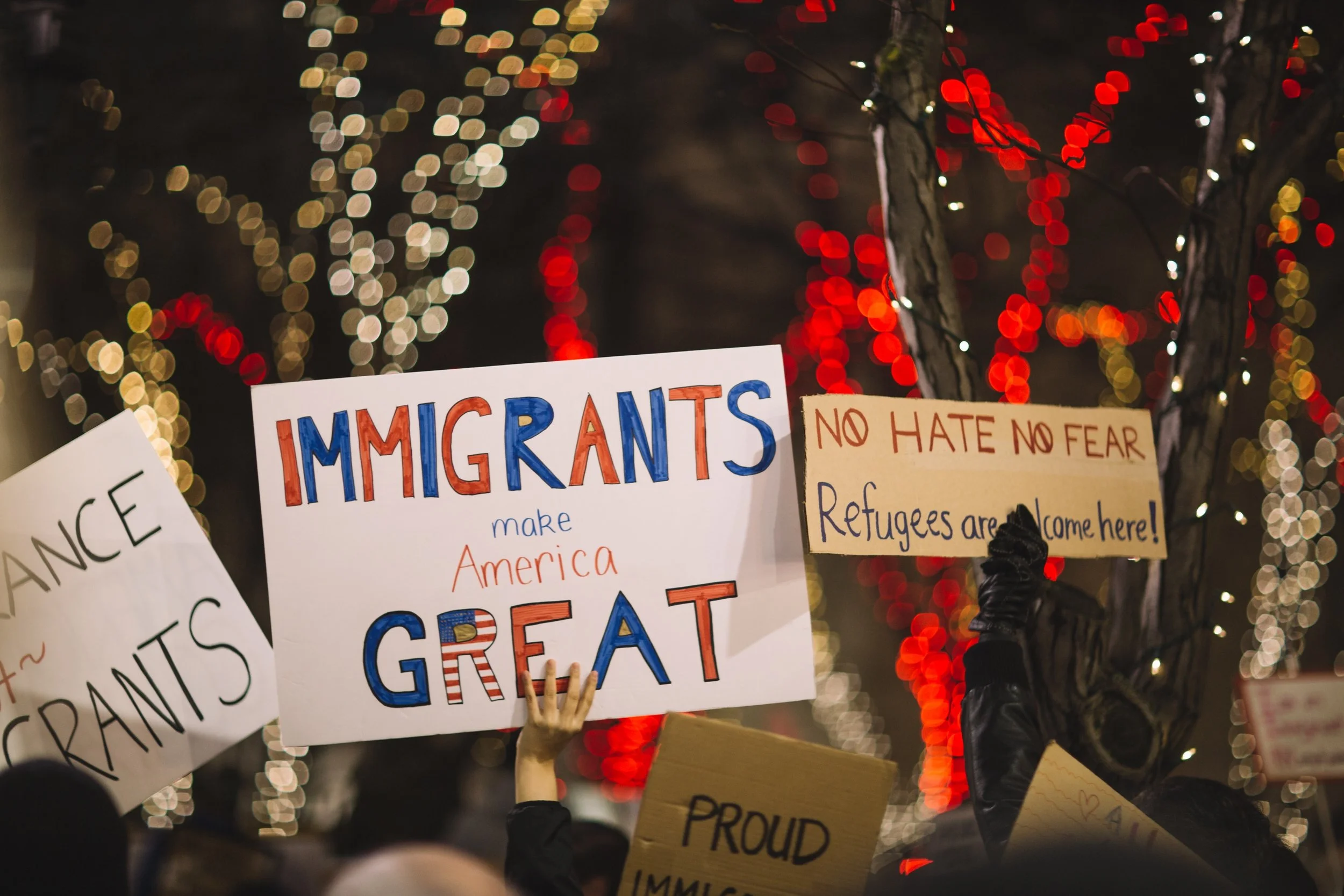
You’ve heard the warnings. Supporters of President Trump’s strict immigration policies are spreading alarm about a caravan of Spanish-speaking migrants bringing deadly diseases to our borders. There are even claims that some of them are carrying smallpox.
by Robert I. Field , professor of law and public health at Drexel University.
You’ve heard the warnings. Supporters of President Trump’s strict immigration policies are spreading alarm about a caravan of Spanish-speaking migrants bringing deadly diseases to our borders. There are even claims that some of them are carrying smallpox.
If that were true, it wouldn’t be the first time. Caravans of disease-carrying migrants have reached our borders before, and the devastating effects for public health are well known. They spread measles, typhus, cholera and a host of other lethal infectious conditions in addition to smallpox, causing misery and death for countless native-born Americans.
The first caravan, this one composed of ships, arrived in 1492 from Spain. Its successful voyage led many others to follow from England, France and other countries in Europe, bringing waves of disease-carrying migrants. Within a few decades, the illnesses they carried had sickened or killed thousands of people.
The early migrants didn’t know they harbored deadly germs. Most of them had developed immunity from early exposure at home. However, they were highly infectious to those who had never been exposed, like the people who lived in America before they arrived.
But, there is a big difference between the public health consequences of the migrant caravans of past centuries and the one that recently arrived at the Mexican border. We know with certainty that none of the newcomers has smallpox, because that disease was completely eradicated almost 40 years ago. And there is no evidence that they present any serious disease risk. We also have tools for screening and treating them, if they do.
Border controls today are, of course, essential for protection against countless risks that open borders could present. But debates over immigration policy should focus on real risks and benefits of immigration, not imaginary ones. The health threats from today’s migrants are nothing compared to those brought by the early European newcomers, some of whom are the forebears of those warning about the risks of immigration today.
———————————————————————————————
This blog post first appeared in the Health Cents blog on Philly.com.

Minor Access to Prophylaxes in Massachusetts: STI Consent, the Mature Minor Rule, and the Definition of "Treatment"
The Massachusetts Joint Committee on Public Health is currently considering House and Senate bills to amend the Commonwealth’s emergency consent statute (Section 12F), which allows certain minors to self-consent to general medical care, and allows all minors to self-consent STI diagnosis and treatment.
By Jason Potter
The Massachusetts Joint Committee on Public Health is currently considering House and Senate bills to amend the Commonwealth’s emergency consent statute (Section 12F), which allows certain minors to self-consent to general medical care, and allows all minors to self-consent STI diagnosis and treatment. The bills would add the term “prevention” to the Commonwealth’s STI consent statute, thus allowing minors in Massachusetts to consent to STI diagnosis, treatment, and preventive care. Known as the “PrEP Bill,” S.1186 and H.3249 are sponsored by Senator Julian Cyr and Representative Jack Lewis, respectively. The senators are seeking to expand the language of the portion of Section 12F pertaining to STI-related care so minors may consent to HIV Pre-Exposure Prophylaxis (PrEP) and the human papillomavirus (HPV) vaccine. In my 2016 article PrEP and Our Youth: Implications in Law & Policy, I proposed this very change. On June 27, 2017, I testified before the Joint Committee in support of the PrEP Bill.
In its coverage of the hearing, the State House News Service declared that “[c]urrent law allows minors to consent to care without permission from a parent for treatment of sexually transmitted infections and HIV, but not for pre- or post-exposure treatments for HIV or for the human papillomavirus vaccine.” This suggestion that the PrEP Bill necessary to permit minors to self-consent to PrEP in the Commonwealth is not exactly true. If PrEP is considered a “treatment” under the Commonwealth’s common law “mature minor” rule and/or its STI consent statute, this would provide ample justification for furnishing PrEP to minors without parental consent. In this post, I argue that there is ample support for classifying PrEP, a prophylactic therapy, as “treatment” under either the common law rule or the Commonwealth’s STI consent statute. Therefore, while the PrEP Bill may provide clarification that preventive care is covered under the statute, it is not true that the bill is necessary to achieve that end.
In Massachusetts, notwithstanding statutory limitations, a minor with sufficient capacity to give informed consent may self-consent to medical care if the minor’s best interests are served by declining to seek parental consent. A court need not make the best interests determination; that assessment may be done by the provider. In Baird v. Attorney General, a 1977 case in the Massachusetts Supreme Judicial Court (SJC), the SJC concluded that “apart from statutory limitations . . . , where the best interests of a minor will be served by not notifying his or her parents of intended medical treatment and where the minor is capable of giving informed consent to that treatment, the mature minor rule applies in this Commonwealth.” The SJC then clearly stated that judicial intervention is not required, declaring that “[i]n such a case, . . . judicial involvement is not required.” This common law rule, which is still good law in Massachusetts, is distinct from Section 12F. In fact, the Baird Court noted as much, stating that Section 12F “does not include all minors who might qualify in particular circumstances for application of a mature minor rule.” This language implies that the SJC intended the scope of the common law rule to be broader than the legislative rules.
Some community advocates in Massachusetts have indicated that the Baird Court’s mature minor rule is ineffective as applied to PrEP. According to advocates, the SJC’s specification of “treatment” (an undefined term) numerous times in the Baird holding leaves room for speculation as to whether PrEP is included. The argument goes that under a traditional definition of “treatment,” defined as the management and care of a patient to combat a disease, disorder, or condition, PrEP would not be included. PrEP is a prophylactic therapy prescribed to individuals who are not infected with the underlying disease, disorder, or condition and is, thus, distinct from treatment.
However, there are numerous reasons why prophylaxes are, indeed, treatments. First, the medication primarily used for PrEP is Truvada, an antiretroviral traditionally used as therapeutic HIV treatment but also applied for preventive purposes. The medication at the core of PrEP is principally a treatment drug. Second, excluding preventive therapies from the definition of treatment is logically inconsistent with the Baird Court’s intent to craft a broad rule. Such an implication would essentially mean that, in the ambit of STI-related care, the Commonwealth’s mature minor rule is functionally narrower than the STI-related language in Section 12F. Both specify treatment, but Section 12F also pertains to diagnosis (the common law rule does not), and further, the statute does not require the additional best interests consideration required by the Baird rule. In other words, a narrow reading of “treatment” in Baird that excludes prevention would mean that the common law rule is no more permissive but is, in fact, more limited than the statutory rule. This runs counter to the Baird Court’s suggestion that its mature minor rule should apply to circumstances outside the scope of the consent statute.
But more importantly, an interpretation of the term “treatment” that excludes PrEP ignores the fact that a minor may already self-consent under the common law rule (and Section 12F, for that matter) to HIV post-exposure prophylaxis (PEP). PEP is a combination of Truvada and another ARV administered for thirty days and is highly successful at preventing seroconversion if furnished within a 72-hour window of possible exposure to HIV. PEP is widely considered a “treatment.” After all, PEP treats the condition of exposure to HIV in those at significant risk of HIV infection. PrEP, too, is indicated for those “very high risk of coming in contact with HIV,” as these individuals sometimes have sex without a condom “when they have sex with a person who has HIV infection,” according to the CDC. Thus, the clinical profile of PrEP contemplates that the patient has already engaged in conduct that may have exposed him or her to HIV. Because both PEP and PrEP are considered appropriate for those who may have been exposed to HIV, the two therapies are so closely related that they are indistinguishable. The two therapies even share coding; recommended coding for both PrEP and PEP are “contact with and (suspected) exposure” to HIV (ICD-10, Z20.6). But the similarities do not end there. Both are termed prophylaxes. Both are “event driven” treatments. Both involve the same high-risk group. Both use the same drugs and have similar risks and benefits. (In fact, PEP may involve more risk to the minor because another ARV is added to the therapy.) Thus, since a minor may consent to PEP as treatment under the Baird mature minor rule, there is no reasonable argument that the law would exclude PrEP. In fact, in one of the only PrEP-related court decisions in the world, an Irish high court recently reached the same conclusion about the indistinguishability of PrEP and PEP, finding that any differences between the two “are differences without relevant distinctions.” [p. 31]. The indistinguishability of PrEP and PEP, in part, led the High Court of Justice to conclude that PrEP is a “treatment” under NHS England’s rules. [pp. 35-37].
Nearly all of these arguments that PrEP is a treatment apply with equal force to the STI consent statute, which is limited to “diagnosis and treatment.” But a consideration of whether PrEP is a treatment isn’t even necessary under the plain language the Section 12F. All that’s necessary is consideration of whether PrEP is related to diagnosis or treatment of HIV, for the STI consent statute states that a minor who believes himself to have or come into contact with an STI may “only consent to care which relates to the diagnosis or treatment of such disease.” There is no ambiguity here. PrEP is surely a type of care related to the treatment of HIV. PrEP is prescribed so the patient doesn’t need treatment in the first place. Not needing something is related to something. Since a prophylaxis prevents the need for treatment of infection, it relates to treatment of infection. Thus, I strongly aver that PrEP therapy (and the HPV vaccine, for that matter) may be prescribed under the existing STI consent statute pursuant to a plain reading of the statute.
Therefore, the Commonwealth’s mature minor rule and its STI consent statute are each an independent basis for furnishing PrEP without parental consent. Providers in the Commonwealth should be especially confident furnish PrEP to self-consenting minors under the STI consent statute because it doesn’t even require taking the risk that a court may not consider PrEP a “treatment” if the issue was litigated. Again, all the STI consent statute requires is that the care is related to treatment of HIV.
Thus, while I support the PrEP Bill insofar as it eliminates any uncertainty in current law, I am not doing so because the PrEP Bill is necessary for minors to consent to PrEP in the Commonwealth. It is not.

Of Mosquitoes and “Moral Convictions”: How Rolling Back the Affordable Care Act’s Contraceptive Mandate Jeopardizes Women’s and Children’s Health
December 5 is the deadline to submit comments on the Trump Administration's recent action to gut the Affordable Care Act’s contraceptive mandate, which requires employer-sponsored health plans to ensure women's access to free, effective contraception. This decision, announced in October in two Interim Final Rules, threatens serious harm to American children, because of the risk that women who lack access to contraception will become pregnant, contract Zika, and unwittingly transmit the virus to their developing fetus.
December 5 is the deadline to submit comments on the Trump Administration's recent action to gut the Affordable Care Act’s contraceptive mandate, which requires employer-sponsored health plans to ensure women's access to free, effective contraception. This decision, announced in October in two Interim Final Rules, threatens serious harm to American children, because of the risk that women who lack access to contraception will become pregnant, contract Zika, and unwittingly transmit the virus to their developing fetus. Since 2015, as an exponentially expanding Zika epidemic swept across Latin America, the United States, and its territories, thousands of children around the globe have been born with microcephaly. On the U.S. mainland alone, almost 100 children have been diagnosed with microcephaly or other Zika-associated birth defects. In Florida, the Department of Health has recently reported a new, sexually transmitted, case of Zika in Miami-Dade County. In 2017 alone, 225 cases of Zika infection were confirmed in Florida; 119 are pregnant women, and three infants have been born with congenital Zika syndrome. New York City, more than 400 pregnant women have been diagnosed with Zika since January 2016 and at least 20 infants have been born with microcephaly or other Zika-associated birth defects.
The World Health Organization, Centers for Disease Control (CDC), and other health agencies have scrambled to reduce Zika’s threat by controlling the mosquito population and minimizing the risk of sexual transmission of Zika. The CDC have been particularly outspoken, urging women of reproductive age to consider Zika’s risks to a developing fetus when deciding whether to travel to a Zika-affected area and, indeed, whether to become pregnant at all.
In the face of such a dangerous disease, the Trump Administration’s drastic action to limit contraceptive access is both short-sighted and flawed legally. The Administration announced two new regulations in October authorizing expanded exemptions and accommodations for employers, universities, and other health plan sponsors who wished to deny women free access to FDA-approved contraception, based on the plan sponsor’s religious beliefs or “moral convictions” (82 Fed. Reg.47658 and 82 Fed. Reg. 47838). No exemption or accommodation was provided for plan sponsors seeking to opt out of any other health care service. These new rules make it quite likely that many, especially poor and middle-income, women, will be denied access to effective contraception. While the Fact Sheet accompanying the regulations states that low-income women whose employers opt out may seek contraceptive care through community health centers it conveniently ignores the fact that pending Republican legislation seeks to dramatically reduce federal funding for family planning services, including contraception, and that Republican efforts to repeal the Affordable Care Act would have authorized states to deny Medicaid recipients coverage for such services.
With infectious diseases like Zika, citizens expect government to take direct steps to minimize the chance of disease transmission and to advise them about how to protect themselves. Those most at risk for contracting the Zika virus are, as usual, the poor, who live in substandard housing that fails to protect them from mosquitoes and lack financial and other resources to access effective healthcare, including contraception and abortion. Further, in states like Florida and Texas, even women and girls with financial means are frequently prevented from obtaining the full range of reproductive health care by restrictive federal and state laws governing access to contraception and abortion.
Recent natural disasters compound the problem. Puerto Rico provides a striking example of the intersection of legal and economic barriers; similar problems exist in Florida and Texas. In Puerto Rico, two-thirds of all pregnancies are unintended; recent rates in Florida and Texas were 58% and 56%, respectively. Like their counterparts on the mainland, many Puerto Rican women, both married and single, want effective contraception, especially long-acting reversible contraception (LARC), such as IUDS and hormonal implants, which prevent pregnancy most effectively. However, until the ACA contraceptive mandate became law, LARC was out of reach for almost all middle-class and poor women because of its higher upfront costs.
Today, Puerto Rican women of all economic strata face significant hurdles in controlling mosquitoes and accessing healthcare, due to Hurricane Maria’s massive destruction of island infrastructure. Yet even before the hurricane struck, women living in Puerto Rico were at high risk of contracting Zika and of being unable to plan for the birth of a healthy child. Since December 2015 more than 34,000 people have been infected with Zika in Puerto Rico, more than 3,300 of them pregnant women. Nearly 150 infants have been diagnosed with serious Zika-associated birth defects.
Officials from the CDC and Puerto Rico's Department of Health have worked over the last two years to increase public awareness of the risks posed by Zika, expand access to effective contraception, and minimize Zika transmission to pregnant women. However, since Hurricane Maria, efforts to combat Zika have largely stalled, as both federal and Puerto Rican government officials have focused on other pressing needs - food, safe drinking water, electricity, and other infrastructure repair.
In the face of recent natural disasters, the Trump Administration’s decision to gut access to contraceptive coverage threatens a public health emergency of immense proportion, risking the health of vulnerable women and children. At the very moment that women in Florida, Texas, Puerto Rico, and the U.S. Virgin Islands are in the greatest need of government assistance due to devastating hurricanes, the Administration has erected major barriers to contraception and effective family planning, limiting the ability of women and their families to make informed decisions about the risks of bringing a potentially disabled child into the world. This directly contravenes the Affordable Care Act’s command that “the Secretary of Health and Human Services shall not promulgate any regulation that-- (1) creates any unreasonable barriers to the ability of individuals to obtain appropriate medical care; or (2) impedes timely access to health care services….” (42 U.S.C.A. § 18114).
While the Administration asserts that its new contraceptive coverage policy is necessary to preserve the religious freedom and moral convictions of employers and other health plan sponsors, its promulgation of two Interim Final Rules that limit only women’s healthcare access displays an utter disregard for the constitutional guarantees of equal protection, due process, and personal privacy. Finally, the decision to publish these controversial regulations as Interim Final Rules, with no opportunity for public notice and comment before they go into effect, contravenes the essential requirements of agency rule-making in a democracy.
Everyone committed to gender equity, access to preventative health care, and protecting the public from infectious diseases should consider commenting on the Interim Final Rules before the December 5 deadline. Here is the link: https://www.regulations.gov/comment?D=CMS-2014-0115-13773